Corient
Designing a world-class digital experience for the world's wealthiest clients at speed, at scale, and without compromising craft.
Design Lead
UX Strategy
Design Systems
AI
Overview
Scaling Luxury
Design Lead · 2.5 years · Team of 6 Designers
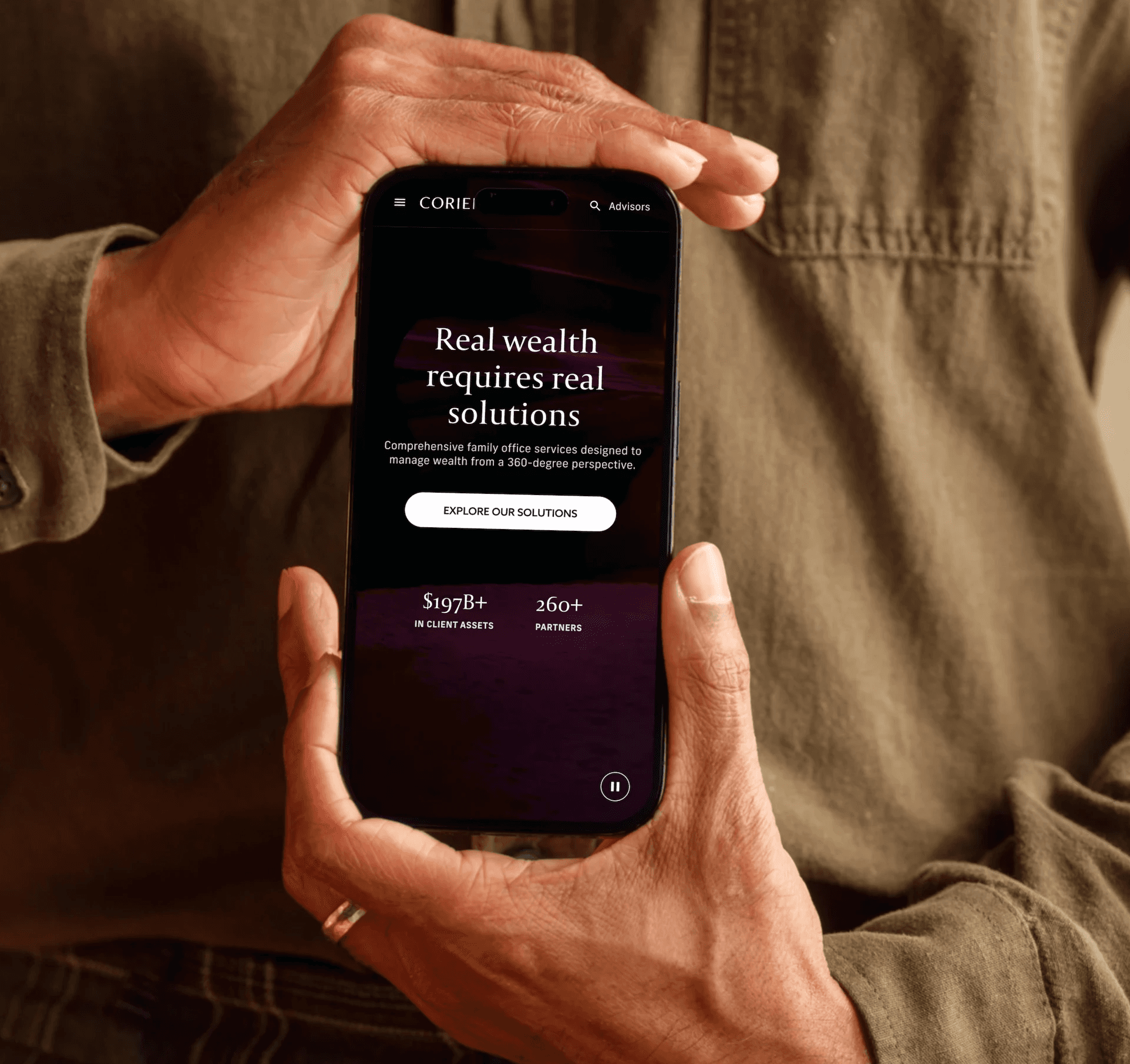
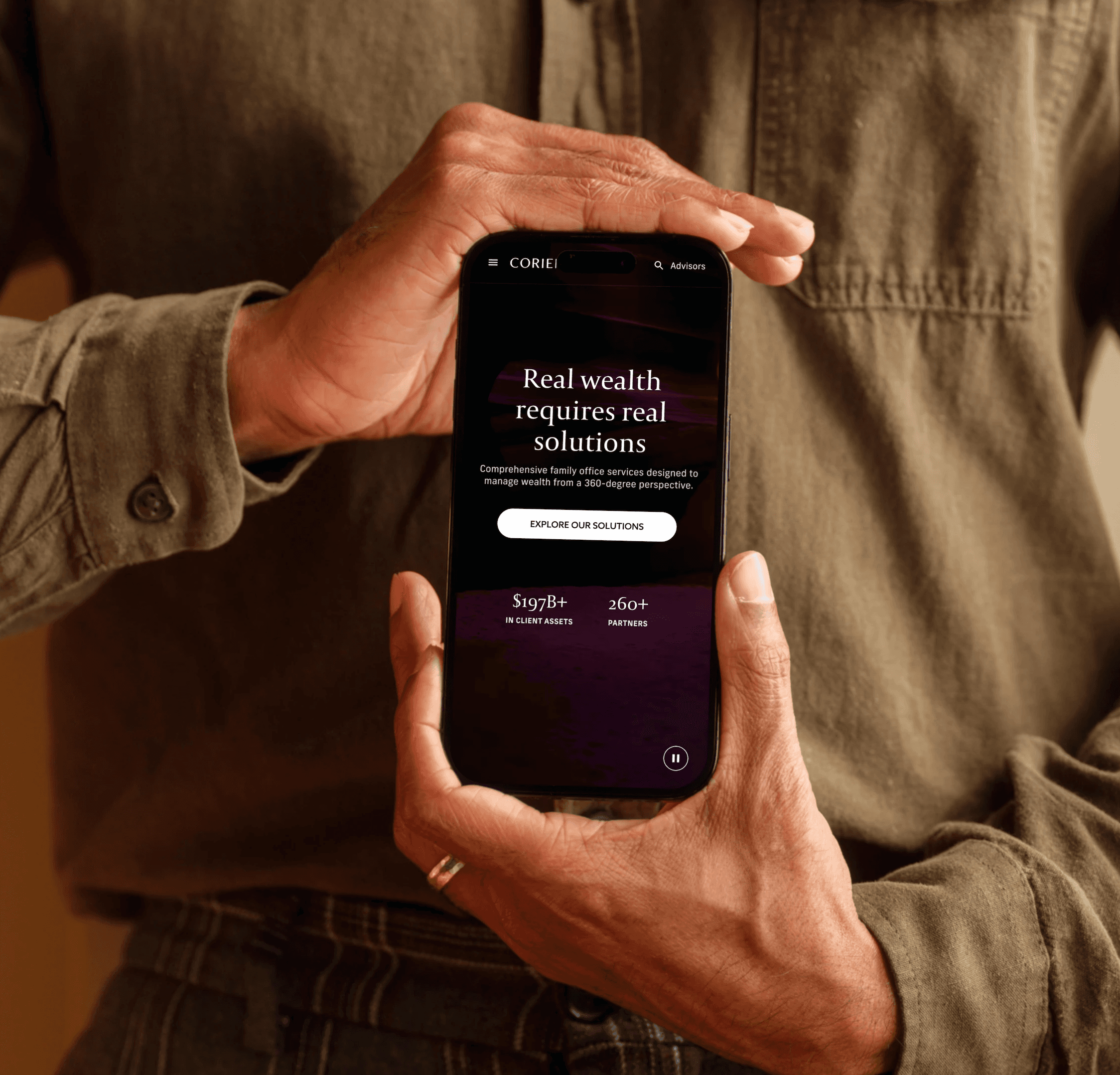
As design lead, I directed a team of six through Corient's transformation from a US boutique wealth management firm into a global player managing $224B in assets for ultra-high-net-worth clients.
Following their acquisition by Mubadala Capital, Corient accelerated their M&A across Europe, Asia, the Middle East, and Africa. This required us to refactor their web experience for WCAG 2.2 compliance, RTL language support, and international regulatory standards. What originally began as a run-and-maintain retainer grew into a $3M engagement.
$0M+
$0M+
In new contracts
Won by the design work on this project
20+
20+
Animated ad campaigns
Built & shipped by our team
10+
10+
New components
Added to the design system
Scope
Two and a Half Years,
One Expanding Brief.
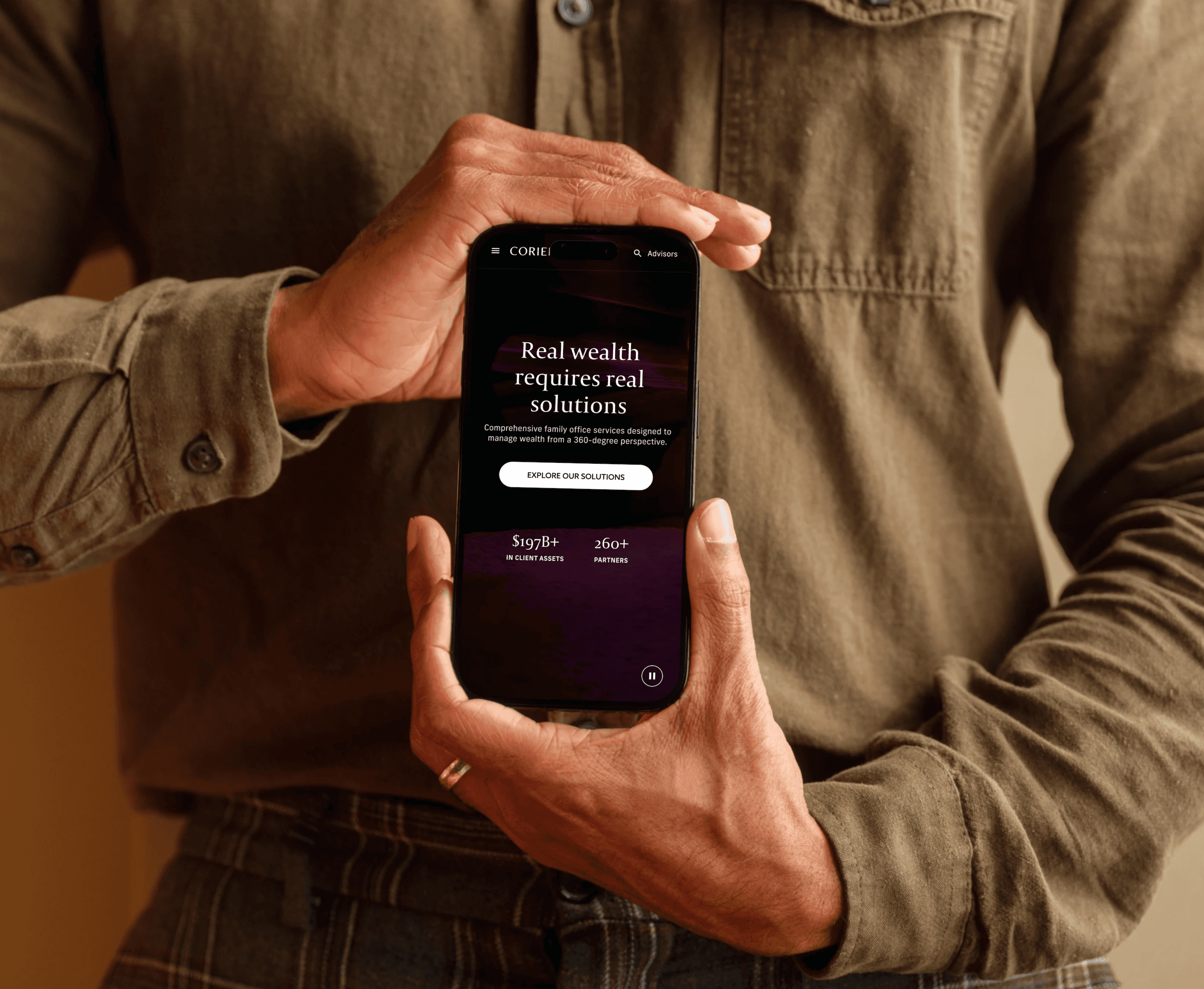
From design system foundations to global expansion, this engagement touched every layer of Corient's digital presence.
CORE DELIVERABLES
01.
Marketing site
02.
Design system
03.
Animated ad campaigns
04.
Lead generation optimization
05.
WCAG 2.2 & RTL language updates
06.
Internal AI Tools
The Challenge
Tale of Three Tensions
Every decision on this engagement had to satisfy three non-negotiable requirements simultaneously to appease our users and the Corient team.

Luxury without compromise
Corient's clientele expect a white glove digital experience that felt luxurious and personally catered to them. Visual quality, motion craft, and typographic precision were required for every solution our team brought to the table.

Accessibility without exception
WCAG 2.2 compliance wasn't optional, particularly with EU expansion on the horizon. The challenge wasn't just meeting the standard, it was meeting it without losing the editorial aesthetic that made Corient's experience distinctive.

Execution under pressure
M&A activity moved fast. Legal deadlines were fixed. Client requests arrived without warning. My job was to absorb that pressure before it reached my team by negotiating scope, aligning expectations with senior stakeholders, and finding solutions that delivered value without burning out the people building it.
Design System Overhaul
Building the Foundation
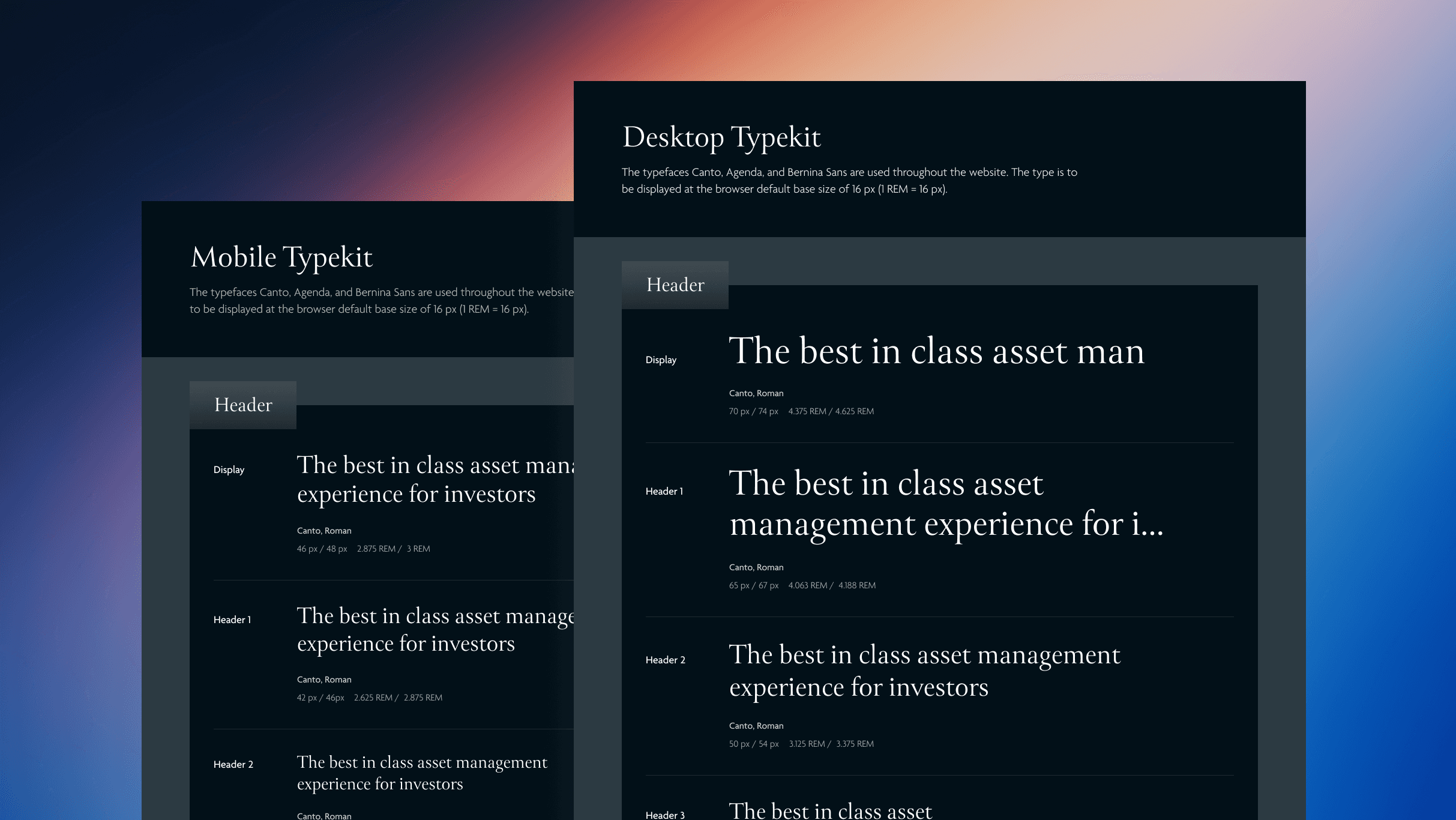
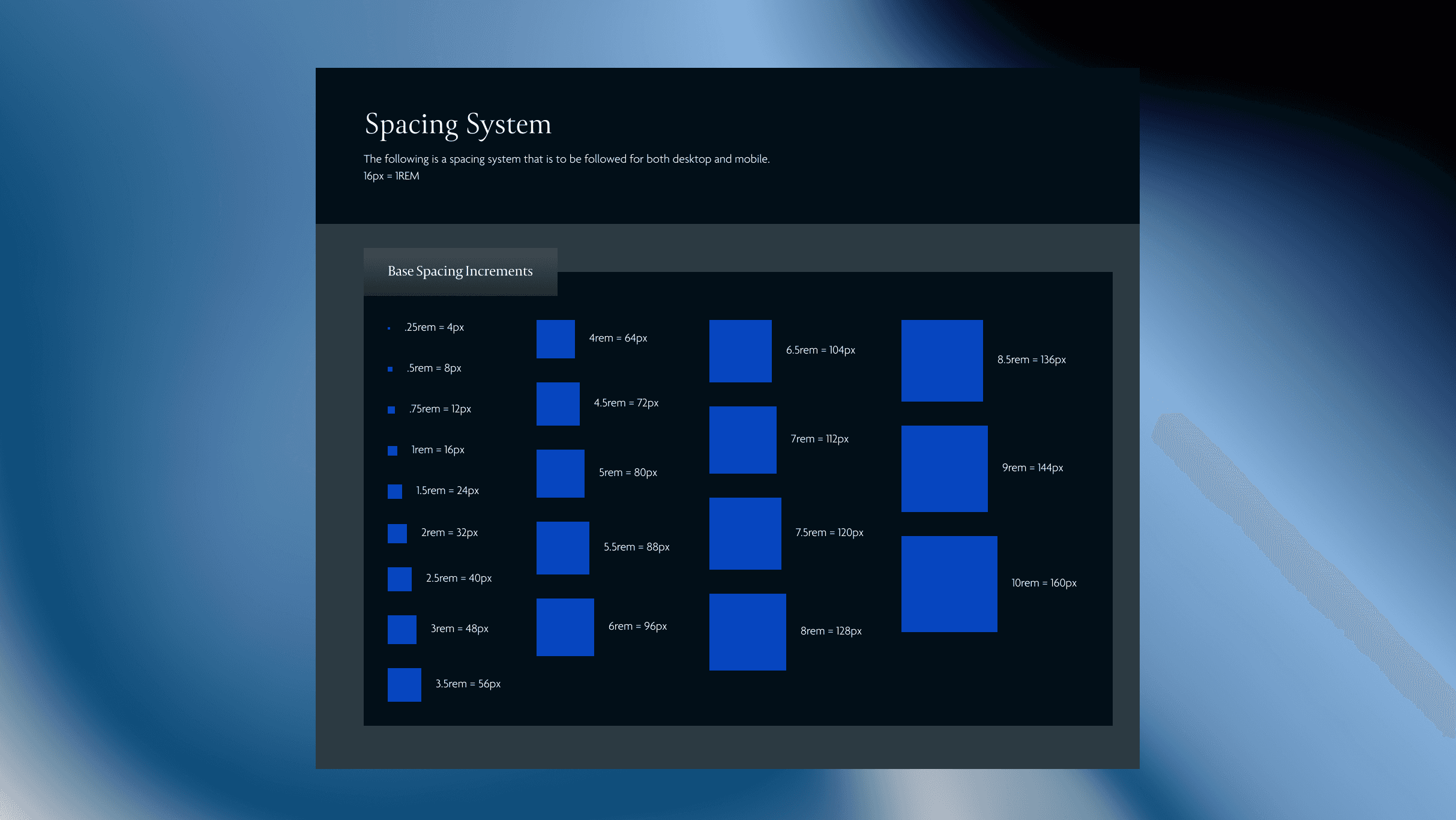
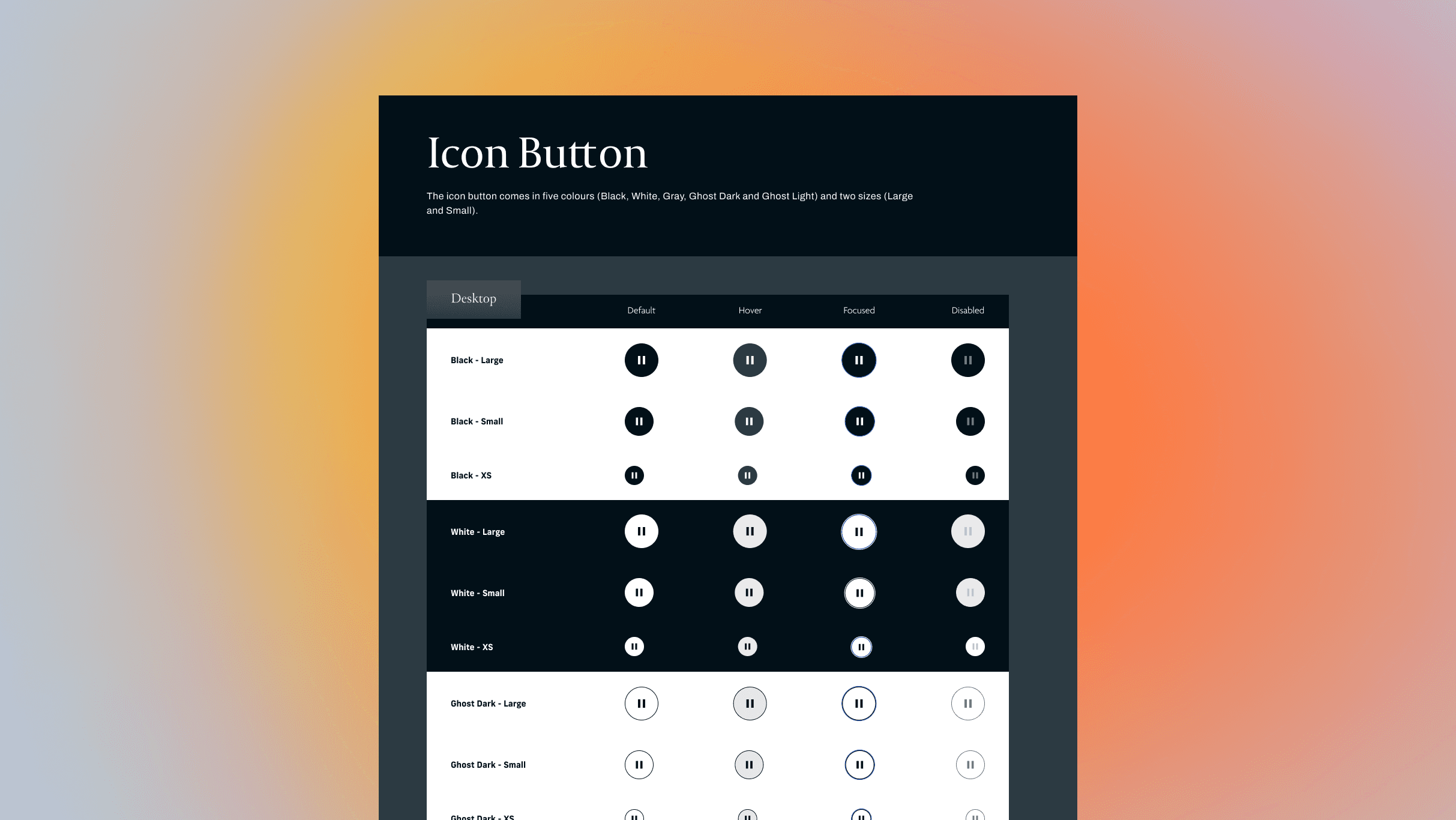
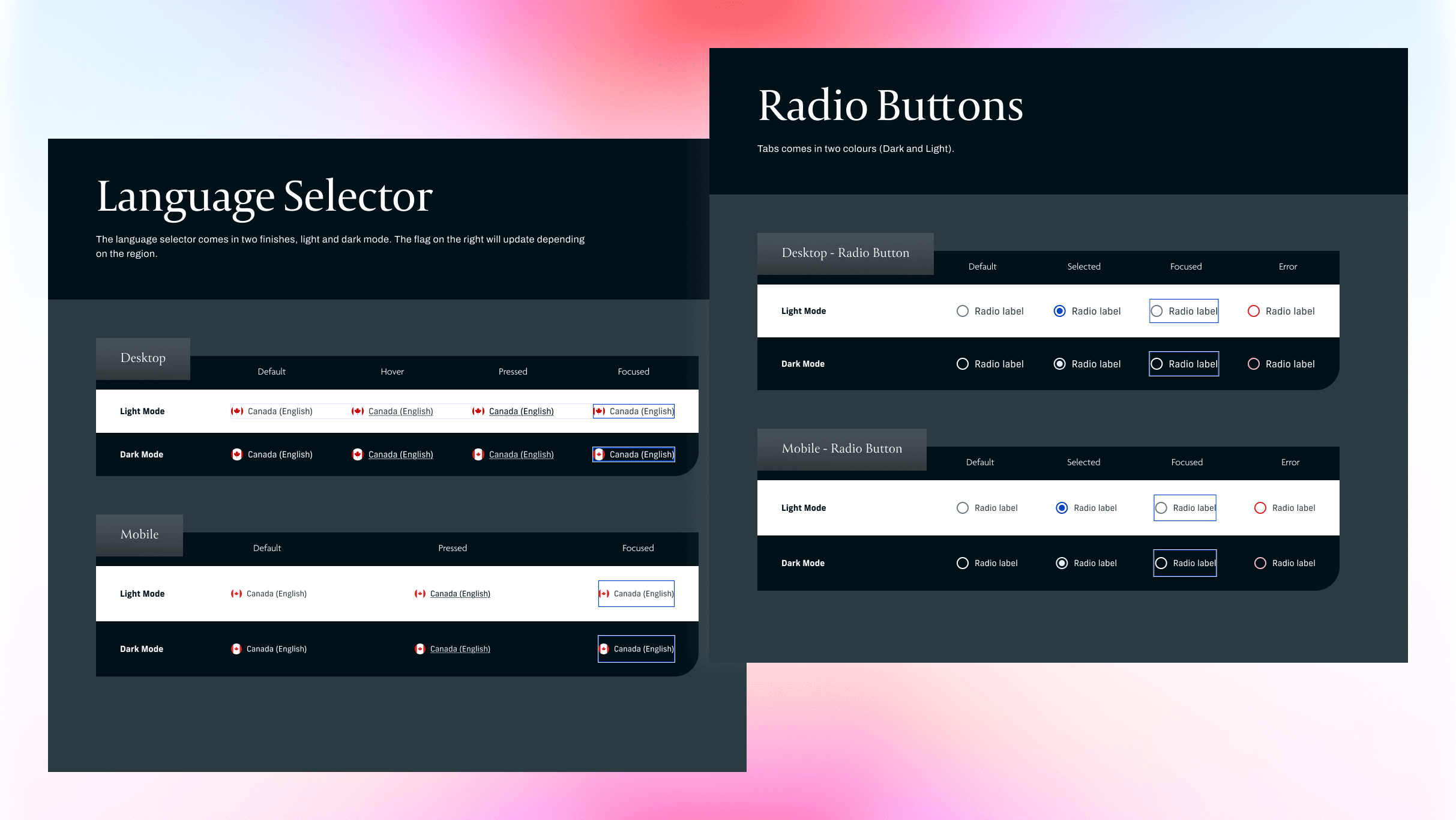
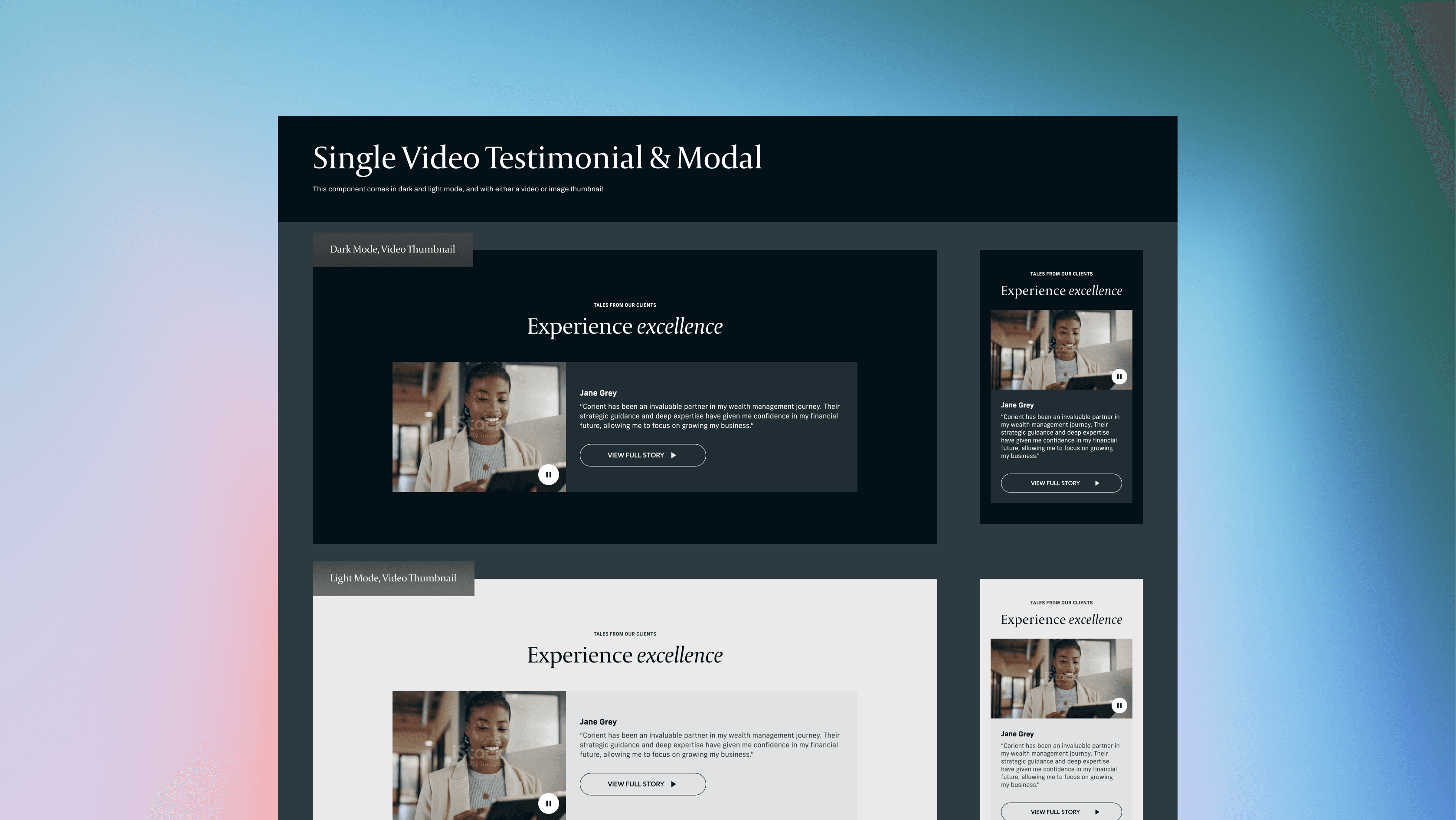
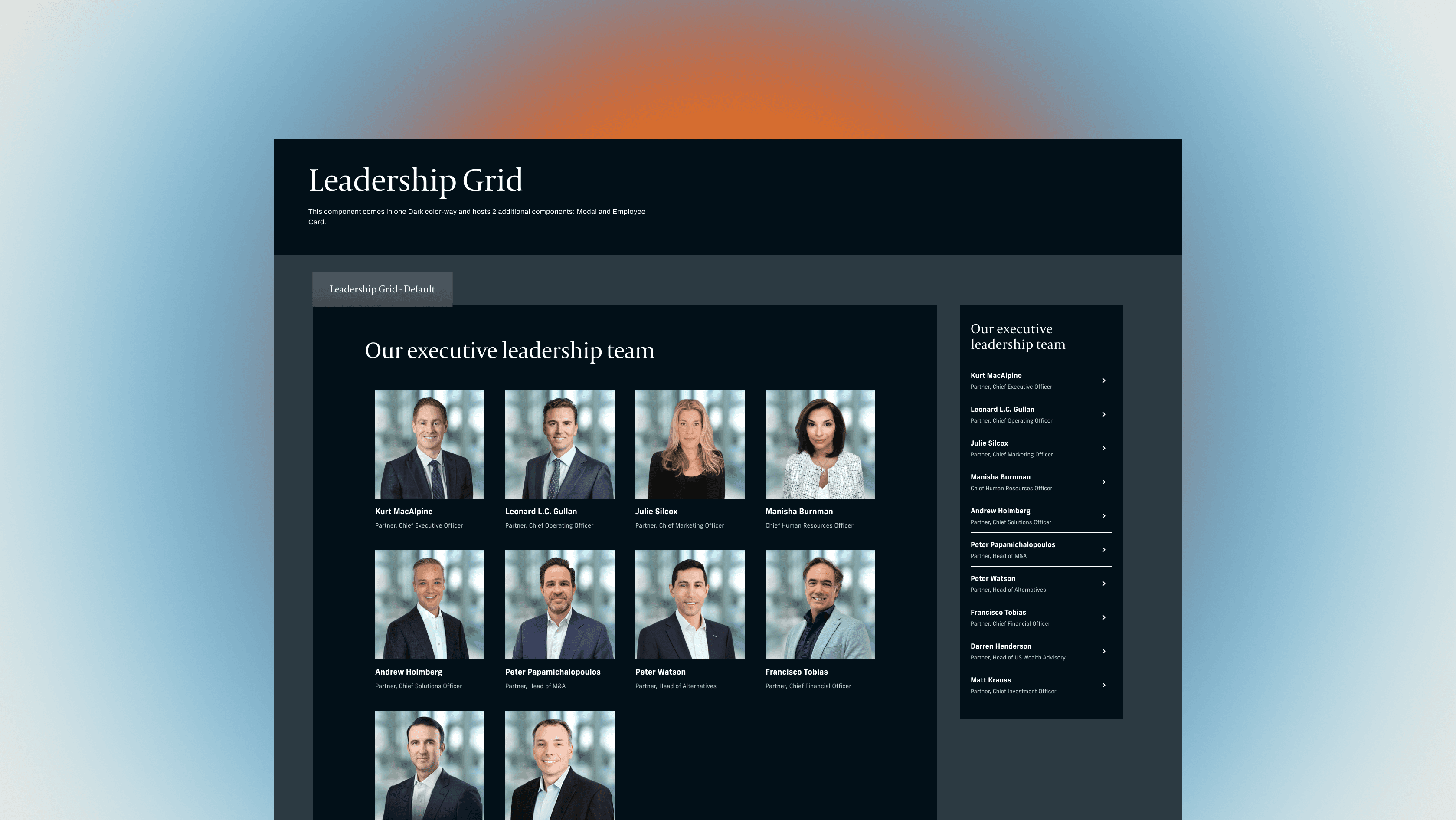
When I began this project, I inherited a skeleton design system that was missing components, states, and viewport designs.
As the engagement scaled, I led a full overhaul: I added 40 new components and added documentation for all components showcasing every interactive state, component resizing behaviour across breakpoints, motion details, and created tokens for colour, spacing, and text to ensure smooth development handoff.
Data Informed Decisions
Less Friction, Better Leads
Corient's lead generation form had a drop-off problem. Our CDP behavioural data showed that users were abandoning the lead form midway through.
Our initial proposed solution was to reduce inputs to reduce friction. But the Corient team pushed back. Every submission was manually reviewed and an easier form meant more volume, including bot submissions they were already struggling with. Lead quality mattered as much as lead quantity.
We found a middle ground: we surfaced the form higher on the page, reduced input field height so users could see more without scrolling, and added motion to make the experience feel considered rather than transactional.
Our team found that form completions and lead quality both significantly improved as a result of these changes.
Before
After
Scaling the Experience
Volume Without Compromise
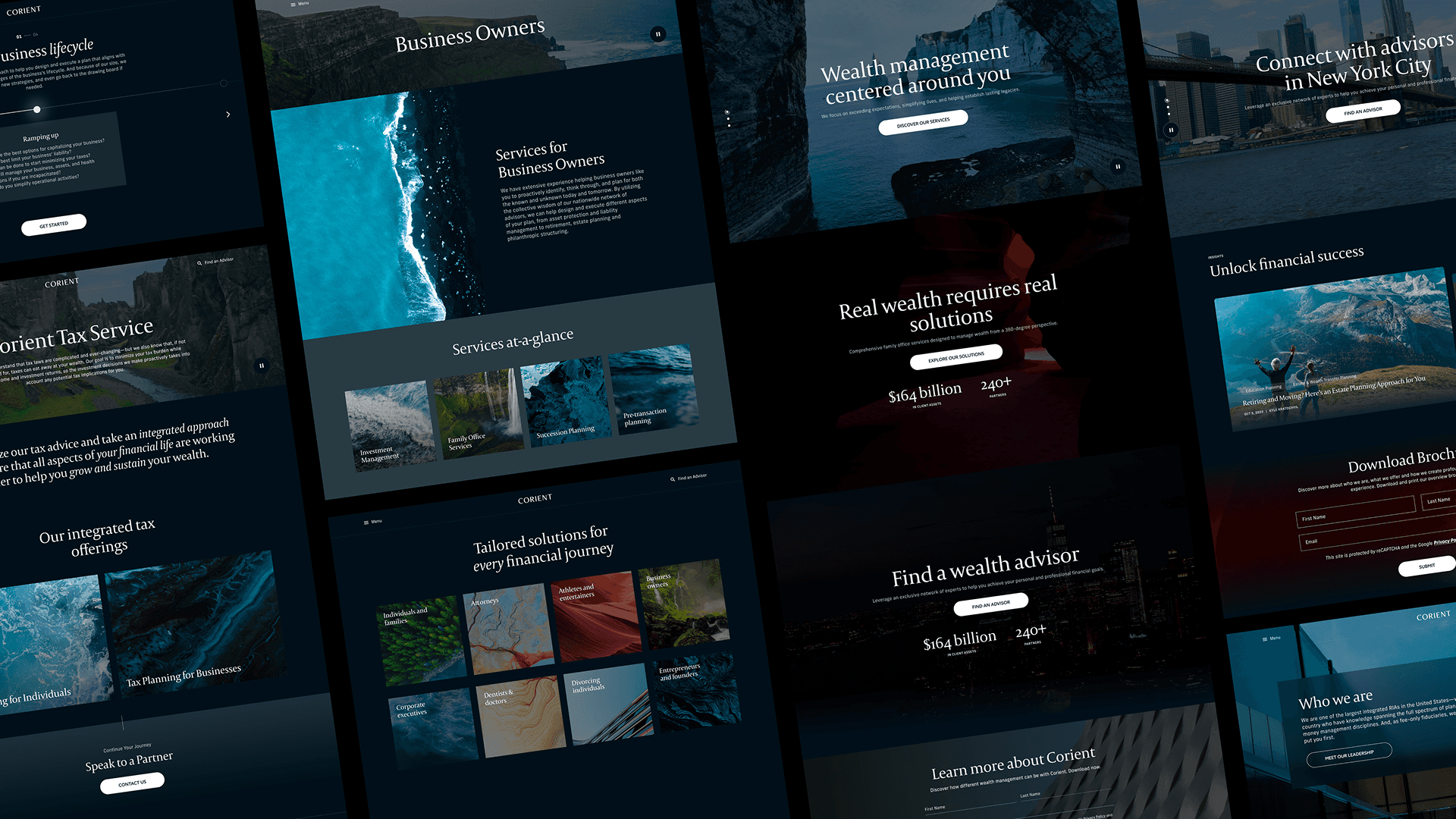
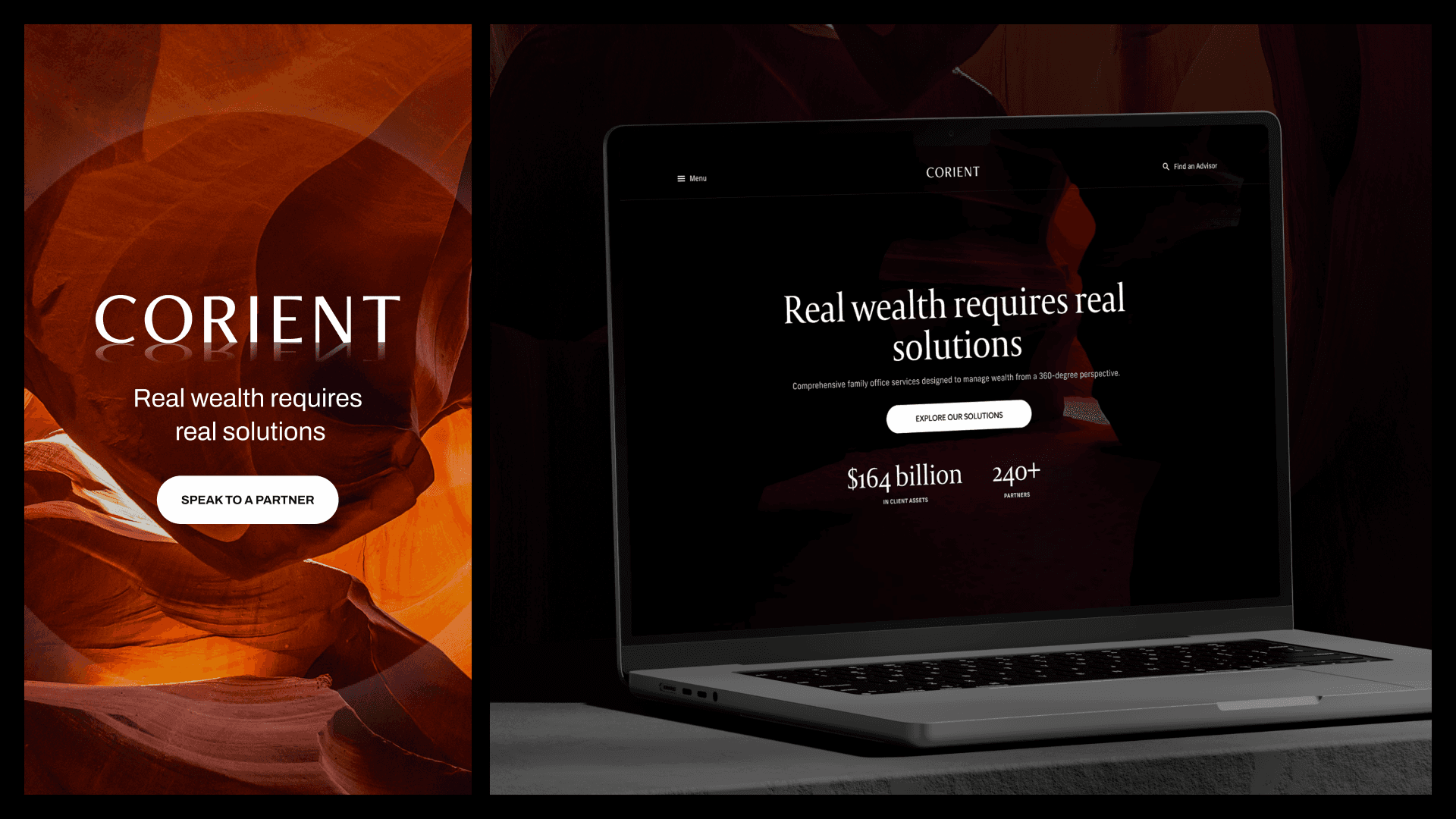
Corient's aggressive M&A activity across the US meant a constant flow of new services and business lines needing to show up on the site, each with a fixed legal deadline and a short runway. Over the engagement, that added up to 30+ marketing pages, every one with a distinct brief.
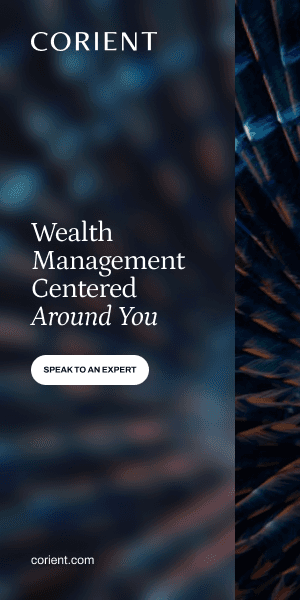
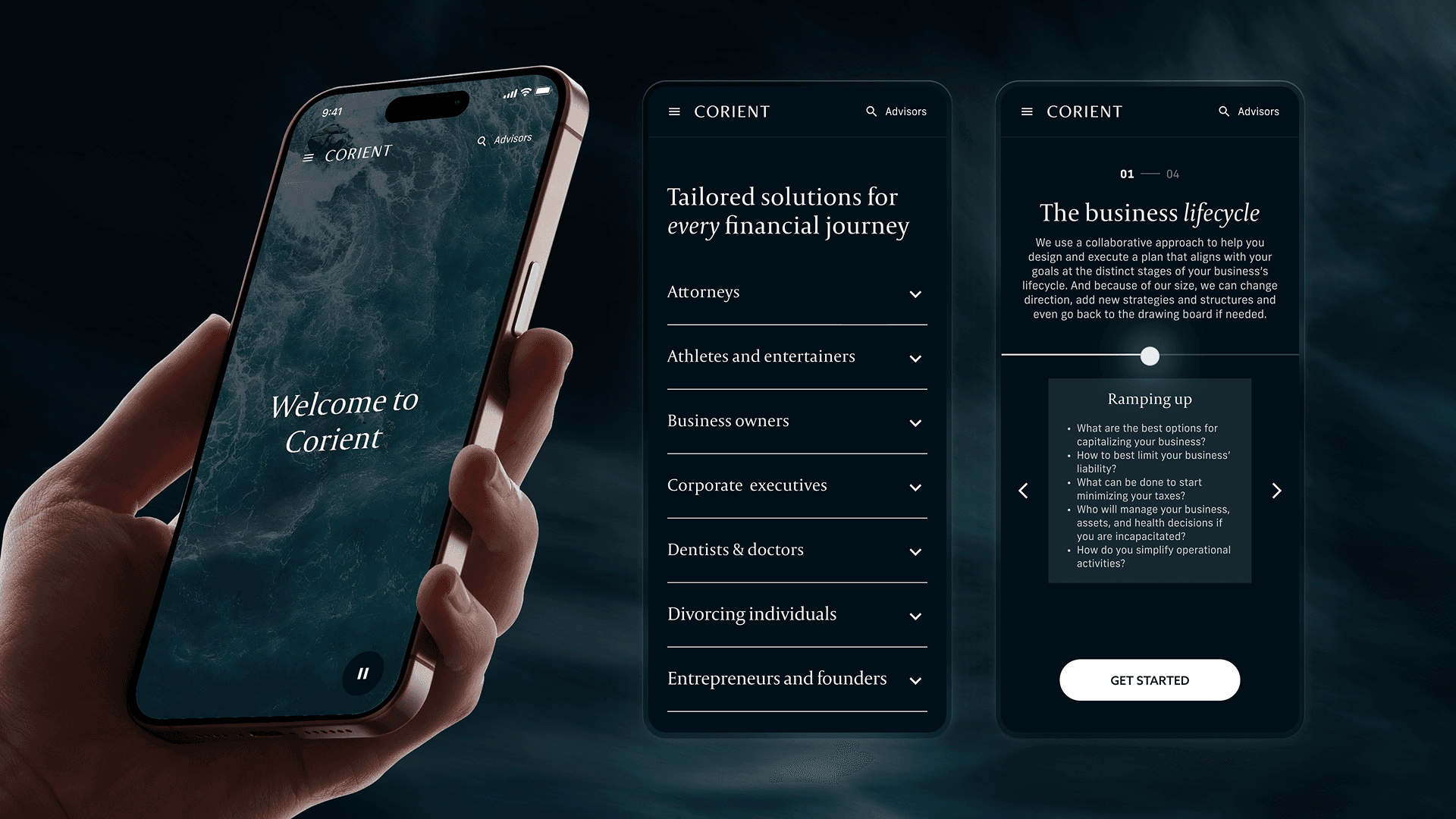
In parallel, I led the design of 80+ animated digital campaigns tied to M&A announcements, quarterly marketing pushes, and persona-driven pushes targeting audiences like entrepreneurs and founders. Digital campaigns were a new venture for me at the start of the project. By the end, I was writing the creative briefs and directing my team to bring them to life.
Strategy Meets Craft
Built on Research
When Corient decided to make a major push targeting entrepreneurs and founders, the existing page wasn't going to carry it. The Corient team came to us without a brief and asked us to figure out what would.
I led a competitive analysis across 25+ wealth management sites and adjacent industries, mapping how competitors positioned services, structured content, and guided users toward conversion. The synthesis surfaced recurring patterns worth borrowing, including impact sections to build trust early, embedded stats for credibility, and contact banners as secondary conversion pathways.
My team built and shipped a refined version of the page, structured to move users through trust building, value demonstration, and conversion in a single scroll.
Before
After
Going Global
Expanding Globally
When Corient was acquired by Mubadala Capital, our scope changed overnight. Corient's boutique US marketing site needed to become a global digital ecosystem spanning across Europe, Asia, Africa, and the Middle East.
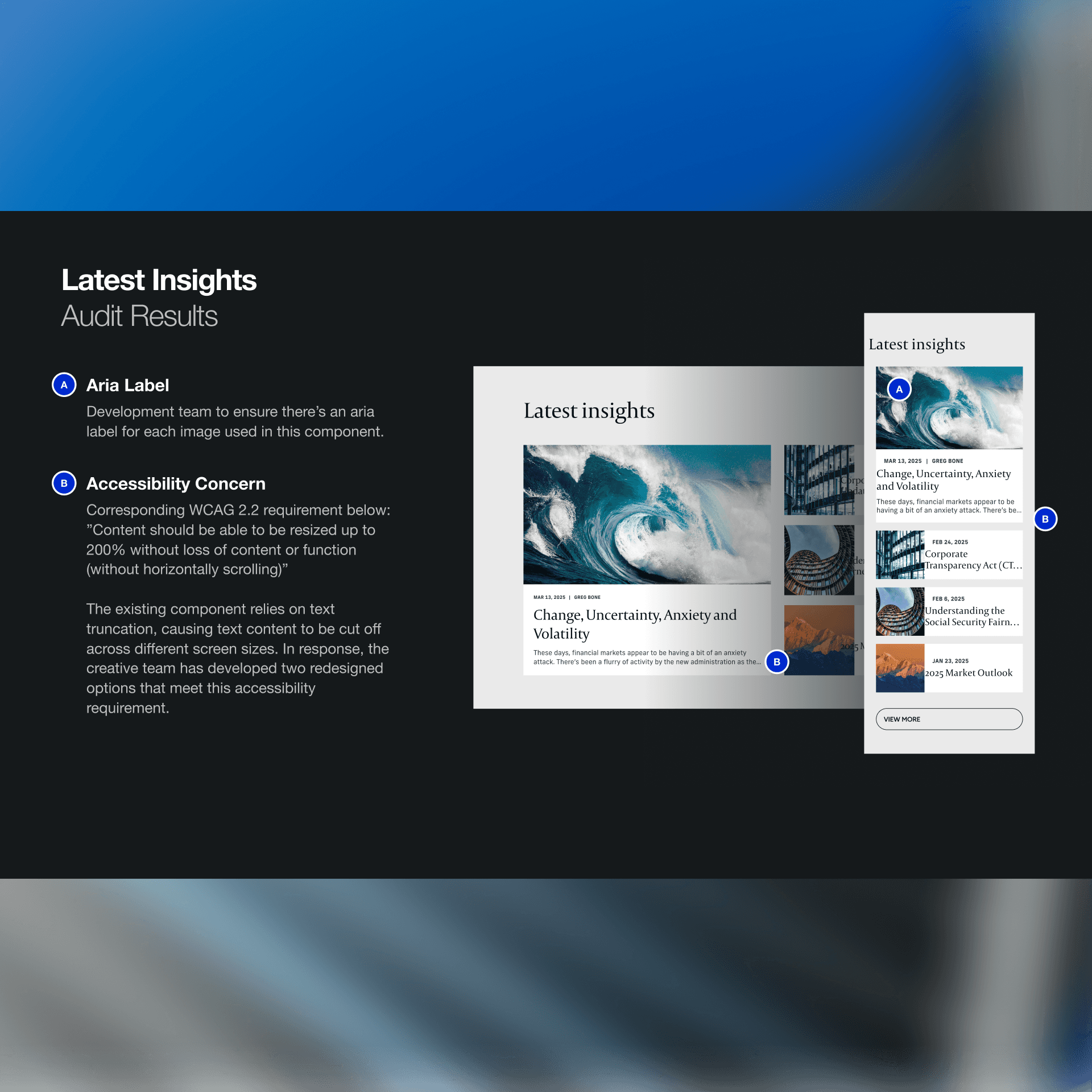
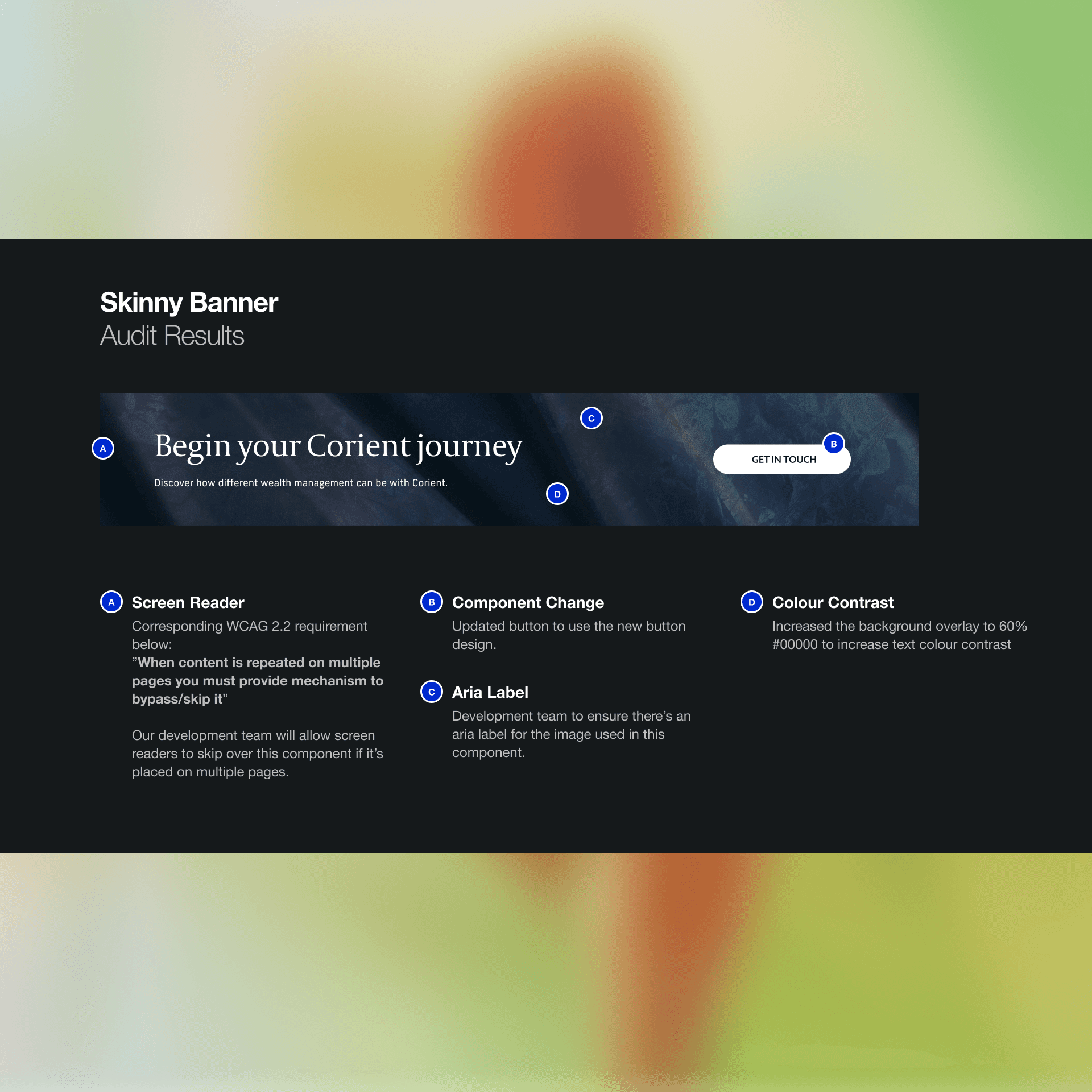
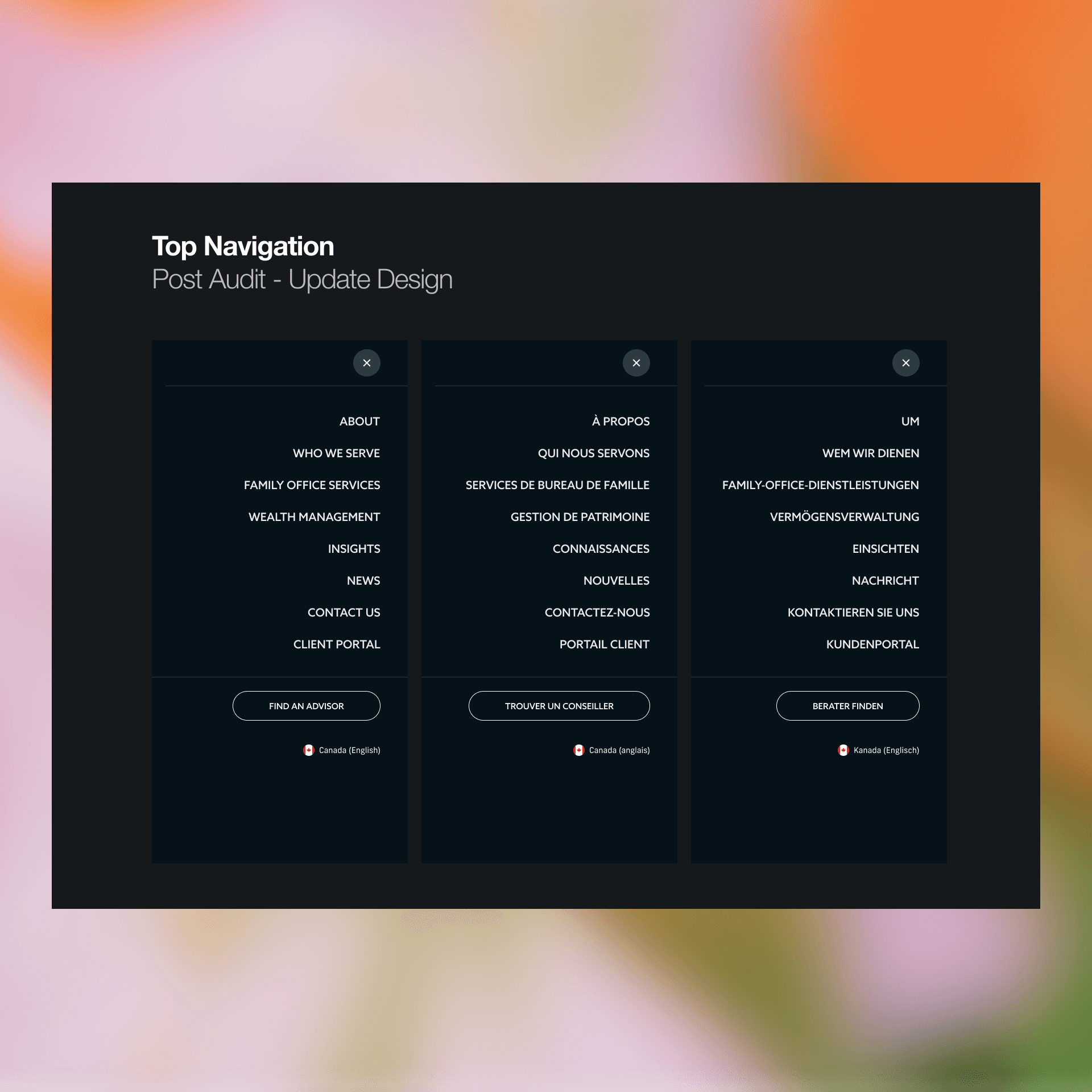
In order to meet EU accessibility requirements, I led a full WCAG 2.2 audit and updates across the entire design system without losing it's editorial aesthetic. My team triaged findings by severity, proposed revised components in structured blocks for client approval, and completed the full design phase a month ahead of schedule.
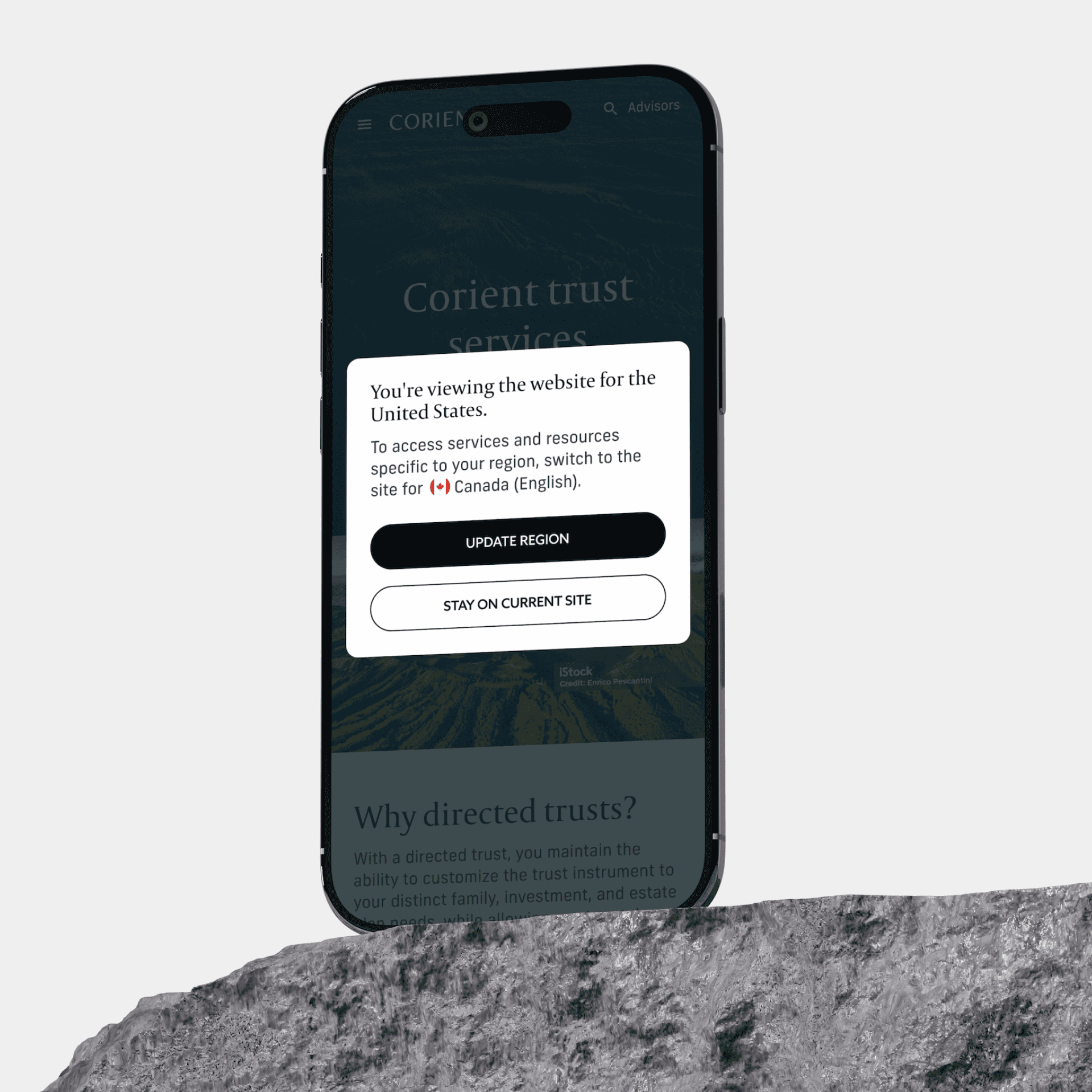
We also solved for RTL layouts, regional content restrictions, and how users transitioned between regional versions of the site.
AI Interlude
Beyond the Marketing Site
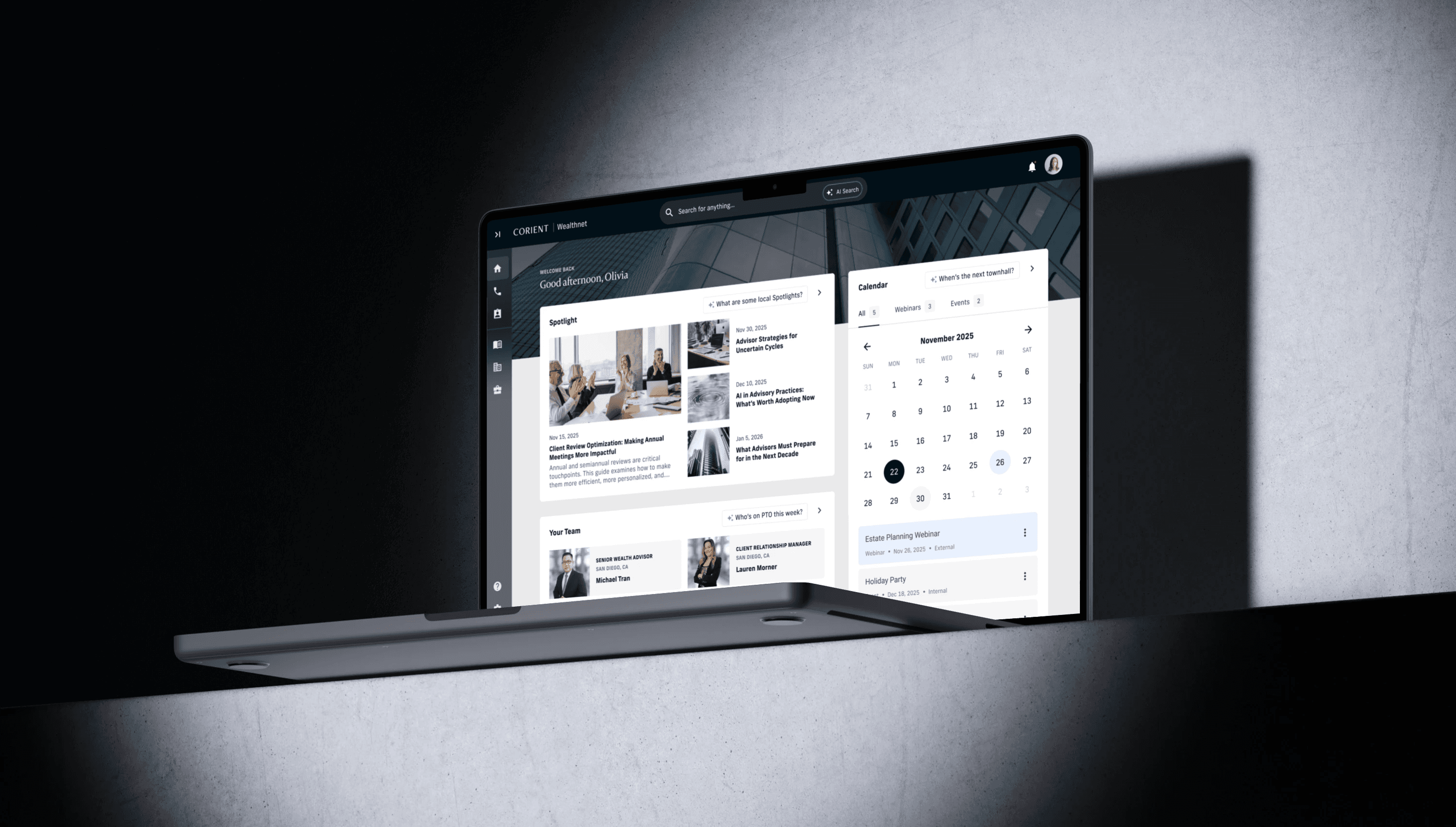
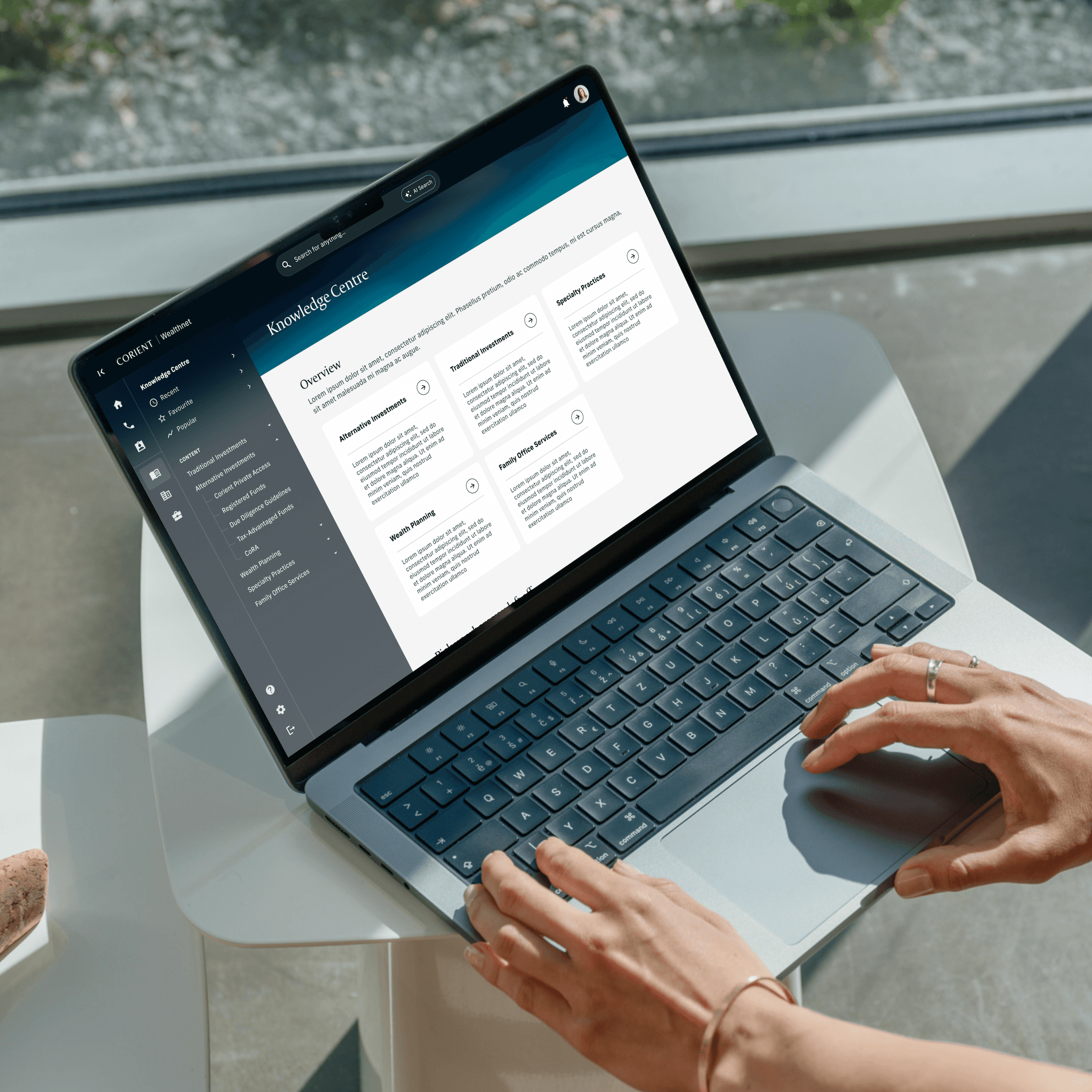
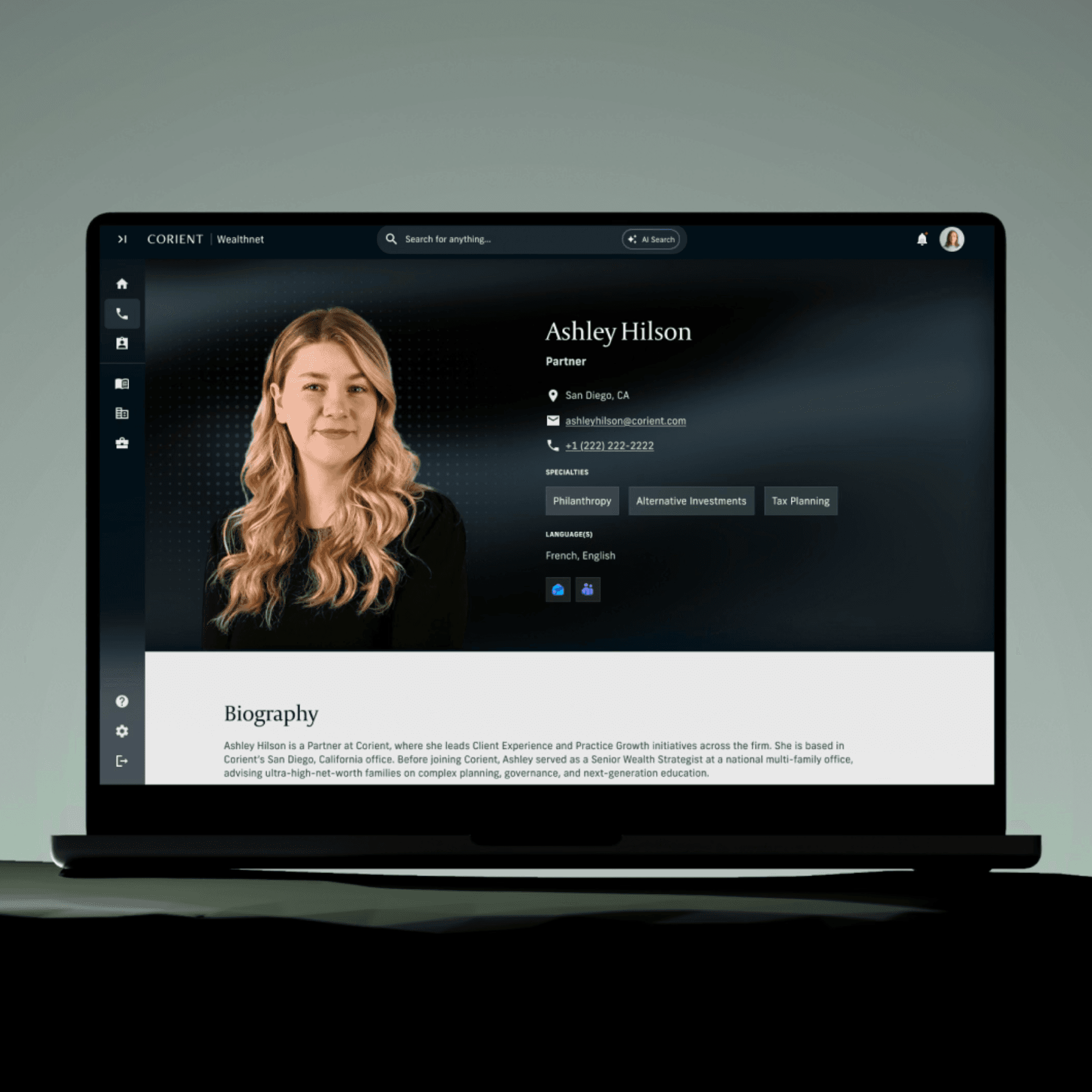
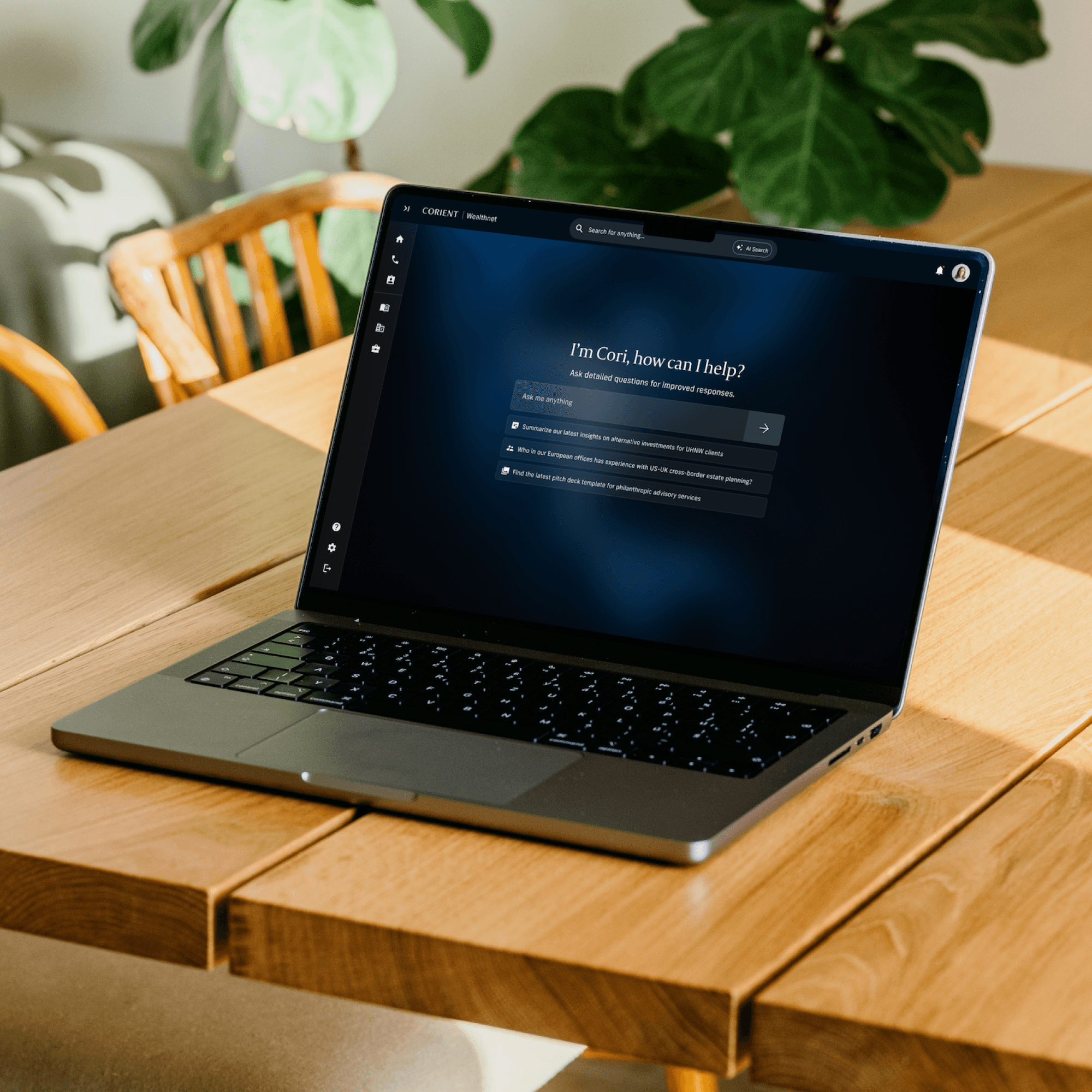
Outside the marketing engagement, I led design on a full redesign of WealthNet, Corient's internal platform for financial advisors. The original tool was hard to navigate. Advisors couldn't easily find each other, their knowledge centre was unstructured, and core tools were buried within the experience.
Starting without a brief, I partnered with strategy to run user interviews and build the product requirements from the ground up. From there I led creative direction, branding, and design across the core pages. I also partnered with our development team on the platform's AI integration, working through where the model could be trusted with the underlying data and where legal requirements had to shape what it was allowed to surface.
I led the project through core build before handing off to another designer for final close.
Reflections
Leadership Learnings
The most important skills I built weren't design related, they were about leading a team through a high momentum project without burning them out.

Shielding your team
Protecting your team is active work, not a passive outcome. It means negotiating scope early, communicating priorities clearly, and checking in often enough to catch problems while they're small. Having momentum doesn't have to mean stress for the people doing the work, you just need to bake in the structure to support them.

Intentionally checking in
As the pace ramped up, I started running biweekly 1:1 coffee chats with each designer on my team. No agenda, just honest conversations about how things were going and what I could do better as a lead. These chats helped me catch blockers early, build trust, and create space for feedback without having to ask for it.

Matching people to the work
Those check-ins became a tool for smarter task assignment. In one chat, I learned a designer who was working on the design system was eager to try ad campaigns. When the next batch came in, I gave her the lead and she knocked them out of the park. Matching people to work that stretches them without sacrificing delivery is the leadership skill I am most proud of building here.
Additional Work
Kea Legard
©2026
Corient
Designing a world-class digital experience for the world's wealthiest clients at speed, at scale, and without compromising craft.
Design Lead
UX Strategy
Design Systems
AI
Overview
Scaling Luxury
Design Lead · 2.5 years · Team of 6 Designers
As design lead, I directed a team of six through Corient's transformation from a US boutique wealth management firm into a global player managing $224B in assets for ultra-high-net-worth clients.
Following their acquisition by Mubadala Capital, Corient accelerated their M&A across Europe, Asia, the Middle East, and Africa. This required us to refactor their web experience for WCAG 2.2 compliance, RTL language support, and international regulatory standards. What originally began as a run-and-maintain retainer grew into a $3M engagement.
$0M+
$0M+
In new contracts
Won by the design work on this project
20+
20+
Animated ad campaigns
Built & shipped by our team
10+
10+
New components
Added to the design system
Scope
Two and a Half Years,
One Expanding Brief.
From design system foundations to global expansion, this engagement touched every layer of Corient's digital presence.
CORE DELIVERABLES
01.
Marketing site
02.
Design system
03.
Animated ad campaigns
04.
Lead generation optimization
05.
WCAG 2.2 & RTL language updates
06.
Internal AI Tools
The Challenge
Tale of Three Tensions
Every decision on this engagement had to satisfy three non-negotiable requirements simultaneously to appease our users and the Corient team.
Luxury without compromise
Corient's clientele expect a white glove digital experience that felt luxurious and personally catered to them. Visual quality, motion craft, and typographic precision were required for every solution our team brought to the table.
Accessibility without exception
WCAG 2.2 compliance wasn't optional, particularly with EU expansion on the horizon. The challenge wasn't just meeting the standard, it was meeting it without losing the editorial aesthetic that made Corient's experience distinctive.
Execution under pressure
M&A activity moved fast. Legal deadlines were fixed. Client requests arrived without warning. My job was to absorb that pressure before it reached my team by negotiating scope, aligning expectations with senior stakeholders, and finding solutions that delivered value without burning out the people building it.
Design System Overhaul
Building the Foundation
When I began this project, I inherited a skeleton design system that was missing components, states, and viewport designs.
As the engagement scaled, I led a full overhaul: I added 40 new components and added documentation for all components showcasing every interactive state, component resizing behaviour across breakpoints, motion details, and created tokens for colour, spacing, and text to ensure smooth development handoff.
Data Informed Decisions
Less Friction, Better Leads
Corient's lead generation form had a drop-off problem. Our CDP behavioural data showed that users were abandoning the lead form midway through.
Our initial proposed solution was to reduce inputs to reduce friction. But the Corient team pushed back. Every submission was manually reviewed and an easier form meant more volume, including bot submissions they were already struggling with. Lead quality mattered as much as lead quantity.
We found a middle ground: we surfaced the form higher on the page, reduced input field height so users could see more without scrolling, and added motion to make the experience feel considered rather than transactional.
Our team found that form completions and lead quality both significantly improved as a result of these changes.
Before
After
Scaling the Experience
Volume Without Compromise
Corient's aggressive M&A activity across the US meant a constant flow of new services and business lines needing to show up on the site, each with a fixed legal deadline and a short runway. Over the engagement, that added up to 30+ marketing pages, every one with a distinct brief.
In parallel, I led the design of 80+ animated digital campaigns tied to M&A announcements, quarterly marketing pushes, and persona-driven pushes targeting audiences like entrepreneurs and founders. Digital campaigns were a new venture for me at the start of the project. By the end, I was writing the creative briefs and directing my team to bring them to life.
Strategy Meets Craft
Built on Research
When Corient decided to make a major push targeting entrepreneurs and founders, the existing page wasn't going to carry it. The Corient team came to us without a brief and asked us to figure out what would.
I led a competitive analysis across 25+ wealth management sites and adjacent industries, mapping how competitors positioned services, structured content, and guided users toward conversion. The synthesis surfaced recurring patterns worth borrowing, including impact sections to build trust early, embedded stats for credibility, and contact banners as secondary conversion pathways.
My team built and shipped a refined version of the page, structured to move users through trust building, value demonstration, and conversion in a single scroll.
Before
After
Going Global
Expanding Globally
When Corient was acquired by Mubadala Capital, our scope changed overnight. Corient's boutique US marketing site needed to become a global digital ecosystem spanning across Europe, Asia, Africa, and the Middle East.
In order to meet EU accessibility requirements, I led a full WCAG 2.2 audit and updates across the entire design system without losing it's editorial aesthetic. My team triaged findings by severity, proposed revised components in structured blocks for client approval, and completed the full design phase a month ahead of schedule.
We also solved for RTL layouts, regional content restrictions, and how users transitioned between regional versions of the site.
AI Interlude
Beyond the Marketing Site
Outside the marketing engagement, I led design on a full redesign of WealthNet, Corient's internal platform for financial advisors. The original tool was hard to navigate. Advisors couldn't easily find each other, their knowledge centre was unstructured, and core tools were buried within the experience.
Starting without a brief, I partnered with strategy to run user interviews and build the product requirements from the ground up. From there I led creative direction, branding, and design across the core pages. I also partnered with our development team on the platform's AI integration, working through where the model could be trusted with the underlying data and where legal requirements had to shape what it was allowed to surface.
I led the project through core build before handing off to another designer for final close.
Reflections
Leadership Learnings
The most important skills I built weren't design related, they were about leading a team through a high momentum project without burning them out.
Shielding your team
Protecting your team is active work, not a passive outcome. It means negotiating scope early, communicating priorities clearly, and checking in often enough to catch problems while they're small. Having momentum doesn't have to mean stress for the people doing the work, you just need to bake in the structure to support them.
Intentionally checking in
As the pace ramped up, I started running biweekly 1:1 coffee chats with each designer on my team. No agenda, just honest conversations about how things were going and what I could do better as a lead. These chats helped me catch blockers early, build trust, and create space for feedback without having to ask for it.
Matching people to the work
Those check-ins became a tool for smarter task assignment. In one chat, I learned a designer who was working on the design system was eager to try ad campaigns. When the next batch came in, I gave her the lead and she knocked them out of the park. Matching people to work that stretches them without sacrificing delivery is the leadership skill I am most proud of building here.
Additional Work
Kea Legard
©2026
Corient
Designing a world-class digital experience for the world's wealthiest clients at speed, at scale, and without compromising craft.
Design Lead
UX Strategy
Design Systems
AI
Overview
Scaling Luxury
Design Lead · 2.5 years · Team of 6 Designers
As design lead, I directed a team of six through Corient's transformation from a US boutique wealth management firm into a global player managing $224B in assets for ultra-high-net-worth clients.
Following their acquisition by Mubadala Capital, Corient accelerated their M&A across Europe, Asia, the Middle East, and Africa. This required us to refactor their web experience for WCAG 2.2 compliance, RTL language support, and international regulatory standards. What originally began as a run-and-maintain retainer grew into a $3M engagement.
$0M+
$0M+
In new contracts
Won by the design work on this project
20+
20+
Animated ad campaigns
Built & shipped by our team
10+
10+
New components
Added to the design system
Scope
Two and a Half Years,
One Expanding Brief.
From design system foundations to global expansion, this engagement touched every layer of Corient's digital presence.
CORE DELIVERABLES
01.
Marketing site
02.
Design system
03.
Animated ad campaigns
04.
Lead generation optimization
05.
WCAG 2.2 & RTL language updates
06.
Internal AI Tools
The Challenge
Tale of Three Tensions
Every decision on this engagement had to satisfy three non-negotiable requirements simultaneously to appease our users and the Corient team.
Luxury without compromise
Corient's clientele expect a white glove digital experience that felt luxurious and personally catered to them. Visual quality, motion craft, and typographic precision were required for every solution our team brought to the table.
Accessibility without exception
WCAG 2.2 compliance wasn't optional, particularly with EU expansion on the horizon. The challenge wasn't just meeting the standard, it was meeting it without losing the editorial aesthetic that made Corient's experience distinctive.
Execution under pressure
M&A activity moved fast. Legal deadlines were fixed. Client requests arrived without warning. My job was to absorb that pressure before it reached my team by negotiating scope, aligning expectations with senior stakeholders, and finding solutions that delivered value without burning out the people building it.
Design System Overhaul
Building the Foundation
When I began this project, I inherited a skeleton design system that was missing components, states, and viewport designs.
As the engagement scaled, I led a full overhaul: I added 40 new components and added documentation for all components showcasing every interactive state, component resizing behaviour across breakpoints, motion details, and created tokens for colour, spacing, and text to ensure smooth development handoff.
Data Informed Decisions
Less Friction, Better Leads
Corient's lead generation form had a drop-off problem. Our CDP behavioural data showed that users were abandoning the lead form midway through.
Our initial proposed solution was to reduce inputs to reduce friction. But the Corient team pushed back. Every submission was manually reviewed and an easier form meant more volume, including bot submissions they were already struggling with. Lead quality mattered as much as lead quantity.
We found a middle ground: we surfaced the form higher on the page, reduced input field height so users could see more without scrolling, and added motion to make the experience feel considered rather than transactional.
Our team found that form completions and lead quality both significantly improved as a result of these changes.
Before
After
Scaling the Experience
Volume Without Compromise
Corient's aggressive M&A activity across the US meant a constant flow of new services and business lines needing to show up on the site, each with a fixed legal deadline and a short runway. Over the engagement, that added up to 30+ marketing pages, every one with a distinct brief.
In parallel, I led the design of 80+ animated digital campaigns tied to M&A announcements, quarterly marketing pushes, and persona-driven pushes targeting audiences like entrepreneurs and founders. Digital campaigns were a new venture for me at the start of the project. By the end, I was writing the creative briefs and directing my team to bring them to life.
Strategy Meets Craft
Built on Research
When Corient decided to make a major push targeting entrepreneurs and founders, the existing page wasn't going to carry it. The Corient team came to us without a brief and asked us to figure out what would.
I led a competitive analysis across 25+ wealth management sites and adjacent industries, mapping how competitors positioned services, structured content, and guided users toward conversion. The synthesis surfaced recurring patterns worth borrowing, including impact sections to build trust early, embedded stats for credibility, and contact banners as secondary conversion pathways.
My team built and shipped a refined version of the page, structured to move users through trust building, value demonstration, and conversion in a single scroll.
Before
After
Going Global
Expanding Globally
When Corient was acquired by Mubadala Capital, our scope changed overnight. Corient's boutique US marketing site needed to become a global digital ecosystem spanning across Europe, Asia, Africa, and the Middle East.
In order to meet EU accessibility requirements, I led a full WCAG 2.2 audit and updates across the entire design system without losing it's editorial aesthetic. My team triaged findings by severity, proposed revised components in structured blocks for client approval, and completed the full design phase a month ahead of schedule.
We also solved for RTL layouts, regional content restrictions, and how users transitioned between regional versions of the site.
AI Interlude
Beyond the Marketing Site
Outside the marketing engagement, I led design on a full redesign of WealthNet, Corient's internal platform for financial advisors. The original tool was hard to navigate. Advisors couldn't easily find each other, their knowledge centre was unstructured, and core tools were buried within the experience.
Starting without a brief, I partnered with strategy to run user interviews and build the product requirements from the ground up. From there I led creative direction, branding, and design across the core pages. I also partnered with our development team on the platform's AI integration, working through where the model could be trusted with the underlying data and where legal requirements had to shape what it was allowed to surface.
I led the project through core build before handing off to another designer for final close.
Reflections
Leadership Learnings
The most important skills I built weren't design related, they were about leading a team through a high momentum project without burning them out.
Shielding your team
Protecting your team is active work, not a passive outcome. It means negotiating scope early, communicating priorities clearly, and checking in often enough to catch problems while they're small. Having momentum doesn't have to mean stress for the people doing the work, you just need to bake in the structure to support them.
Intentionally checking in
As the pace ramped up, I started running biweekly 1:1 coffee chats with each designer on my team. No agenda, just honest conversations about how things were going and what I could do better as a lead. These chats helped me catch blockers early, build trust, and create space for feedback without having to ask for it.
Matching people to the work
Those check-ins became a tool for smarter task assignment. In one chat, I learned a designer who was working on the design system was eager to try ad campaigns. When the next batch came in, I gave her the lead and she knocked them out of the park. Matching people to work that stretches them without sacrificing delivery is the leadership skill I am most proud of building here.
Additional Work
©2026